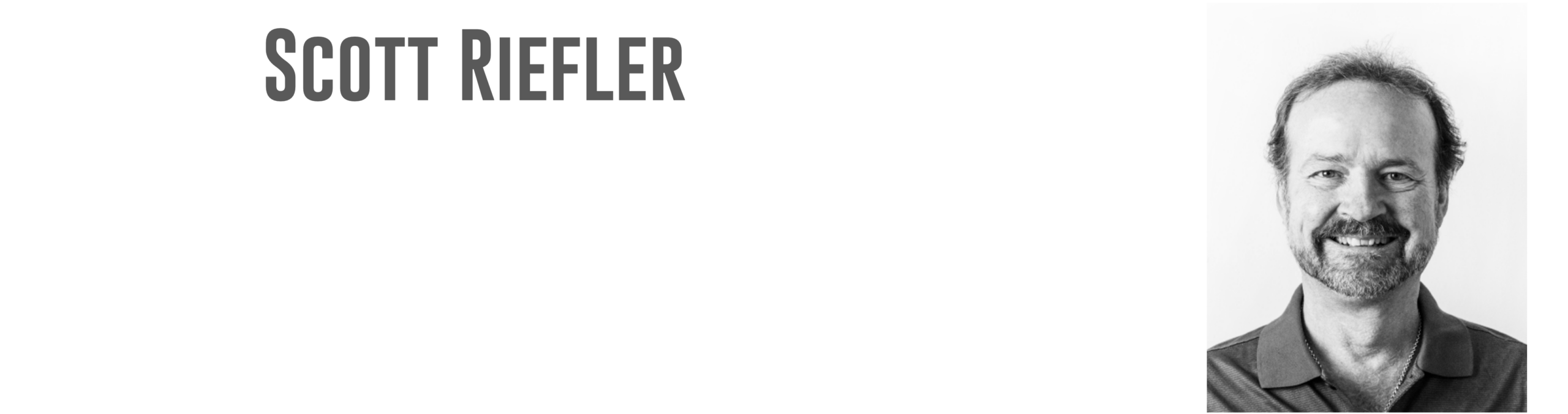
In this Employee Spotlight series, we chat with SōRSE employees from VPs to lab tech, to learn what drives our innovation and makes our team unique.
Today’s Employee Spotlight is on Scott Riefler, Chief Science Officer.
Why did you decide to join SōRSE?
The honest answer is that I was heading towards retirement, and I was at a concert with a friend of a friend who had just gotten a cannabis license in Washington state. And I asked him what he was going to do with that license, and he said he got a producer’s license, so they were going to do pre-rolls and things like that.
And I said, would you ever think about putting cannabis in a beverage? And he thought about it for a little while and said “that’s impossible” and started to list the reasons it couldn’t be done.
And I, being a material scientist, when somebody says it can’t be done, I view that as a challenge. So I worked in his lab for about six months and figured out how to emulsify these cannabinoids. I presented him with an example of a water compatible emulsion.
When I did that, he got very excited and introduced me to Howard, which led to an invitation to join SōRSE in 2017.
Before then, there were non-workable cannabis beverages—they weren’t uniformly dispersed, stable, and free of that bitter, weedy taste. There was nobody doing anything like it at the time. We were the first.
What’s your background?
I have a BS in chemistry. After leaving school, I went to work in an industrial structural epoxy company as a lab technician. I worked there a couple of years, and I responded to an ad from a company that is no longer around called American Cyanamid, who was looking for an epoxy chemist to work in their aerospace division.
I showed it to my supervisor then, who was a bench chemist, and he chuckled and he said, “That’s the pinnacle of the epoxy industry, everybody in the epoxy industry yearns to go to work for a company supplying materials to the aircraft industry”—making it sound like I had no shot.
So I applied, got an interview, and was instantly offered the job. I worked in the structural materials industry for American Cyanamid for 20 years developing materials to hold airplanes together.
My work there ranged from that to providing radar transparency or radar invisibility to aircraft. I also worked in some very high temperature applications, which meant we were stretching technology. I had the pleasure of having NASA scientists assigned to me to develop specific monomers or polymer systems so that we could work in temperatures not previously workable with organic materials.
But as I was getting towards the end of my stay there, I found myself working more and more on implements of war, fighter airplanes, bombers, that kind of stuff. So basically everything I was working on was going into machines that would kill people, and that started to really bother me.
So I left that industry and went to work in the food industry for a family owned mid-sized company to help them with transition of owners, help them with growing the company. And then transition of ownership to their children. I worked there for about 17 years and then was heading towards retirement. And then I went to that concert with the friend with the cannabis license.
What’s a common industry assumption you disagree with?
That minor cannabinoids have pronounced healing effects. That hasn’t yet been scientifically proven yet. Show me the data.
What’s the best professional advice you’ve ever received?
This is way up at the top of the list: never substitute knowledge for familiarity, because you will always be sniffed out.
You can only operate one level above what your basic knowledge is. Think about a ski instructor or a golf instructor. You can never teach somebody what you don’t know, so you can only teach one layer above your knowledge. It’s like an onion. And when you get to that point in peeling down that onion where you really don’t know, don’t pretend like you do.
In short, if you’re familiar with something, say so. Don’t pretend like you’re knowledgeable.
Here’s another one: keep your passion, but don’t let it get under your skin when things don’t go the way you think they should.
What about the worst advice?
If you’re unhappy, leave.
No. My commitment is to fix it, to leave it better than I found it.
What’s a skill you have that would surprise your coworkers?
I do a lot of yoga and meditation, and I’m a pretty good cook.
I like to prepare gourmet meals. For example, many people, when they make a meat sauce, will put the meat in the sauce and cook it that way. But then when you do that, you lose some of the flavor bursts that you get. So I often when I prepare meals, I bring the various components together while they’re being plated, rather than just try to cook it all in one pan.
So like, if you’re cooking mushrooms for a tomato sauce for spaghetti, don’t cook the mushrooms in the sauce. You cook the pasta halfway, then you finish cooking the pasta in the sauce so that the flavor penetrates the pasta itself and then once you plate it, you add the mushrooms to it.
That chemically keeps the flavor intensity rather than diluting it all and blending it together for a singular flavor sensation. You’ll you note sometimes when you eat foods, particularly at a restaurant, you’ll get pops of different flavor sensations.
It’s like when you add basil to something, you add it at the very end because you don’t want to distill off all the all the all the terpenes that are in the basil.
Why cannabis?
I have been a cannabis user my entire life. I probably started using cannabis when I was 16, and this is something else people probably don’t wouldn’t guess about me. I use cannabis daily, never at work.
But I never thought I’d reach a day where you it would be decriminalized or illegal, so I wanted to participate in that, I think.
Cannabis prohibition has been a bad thing. And I’ve lived through the transition. So, yeah, when I had the chance, I brought all my worlds together. I brought my chemistry, material science, and product development worlds together.
Obama once said that you should never have a law that makes most of the citizens a criminal. So I had an opportunity to apply my trade in an area that I just found interesting.
If you weren’t doing this job, what would you be doing?
I’d be retired. I’d be walking the beach, spending time with my lovely bride, skiing, hiking, playing more golf.
If you could change one thing about your lived life, what would it be?
Wag more, bark less. I wish I’d taken a bit more joy and complained a bit less.
What are three things you can’t live without?
My wife Diana, good music, and good food. The Grateful Dead, the Rolling Stones, Eric Clapton, Pink Floyd, that kind of stuff. And if I get four things: a big bag of weed.